First Aid Kits: Why Every Workplace, Vehicle and Home Should Have One
Accidents rarely come with a warning. A cut from a sharp tool, a burn in a workshop, a fall on a construction site, or even a minor injury at home can happen within seconds.
While professional medical assistance is essential for serious injuries, having a properly equipped first aid kit nearby can make an important difference during the first few minutes of an emergency.
For companies in particular, a first aid kit should not simply be viewed as a box mounted on the wall. It is an important part of a complete workplace health and safety system.
Whether you operate a construction site, warehouse, factory, office, restaurant, school, shop, or fleet of vehicles, accessible first aid supplies help employees respond quickly when an incident occurs.
Workplace Injuries Are More Common Than Many People Think
Workplace safety remains a major global challenge.
According to the International Labour Organization (ILO), approximately 395 million workers worldwide sustain a non-fatal work injury every year. The ILO also estimates that around 2.93 million workers die annually as a result of work-related factors, including occupational accidents and diseases.
Of those work-related deaths, approximately 330,000 are caused by occupational accidents, while the majority are associated with occupational diseases.
The issue extends beyond the workplace. According to the World Health Organization (WHO), injuries cause approximately 4.4 million deaths worldwide every year, representing around 8% of global deaths.
Accidents cannot always be completely prevented, but being prepared can significantly improve the way an emergency is handled.
What Is a First Aid Kit?
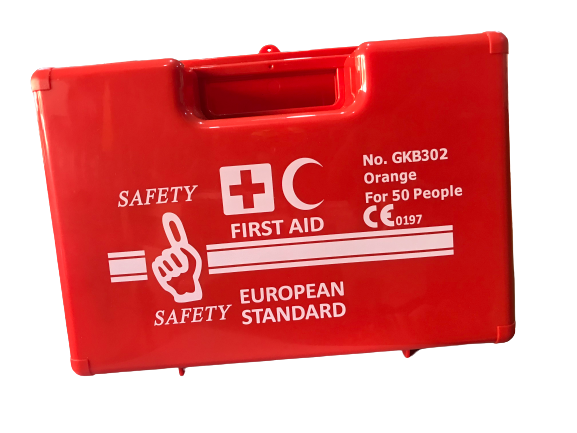
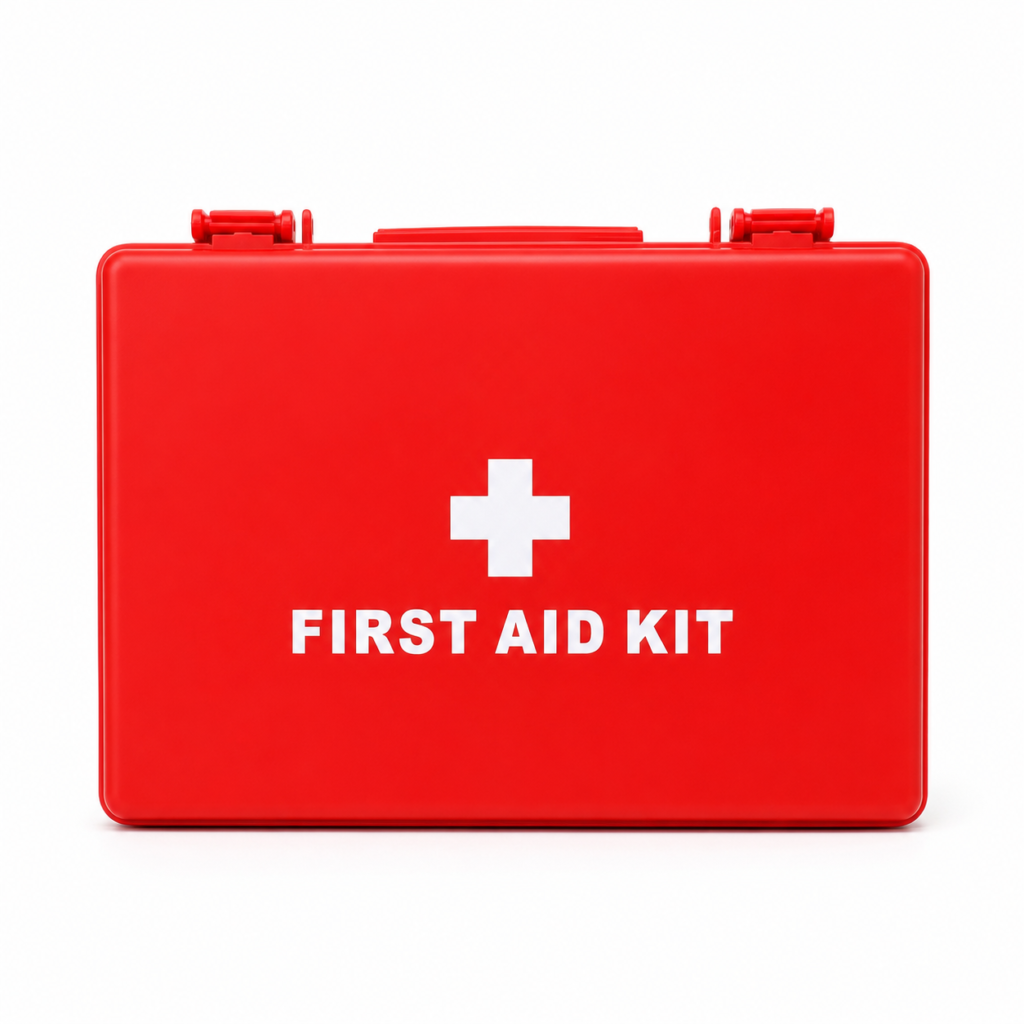
A first aid kit is a collection of medical supplies and equipment designed to provide immediate basic care following an injury or medical emergency.
Its purpose is not to replace doctors, hospitals, or emergency medical services. Instead, first aid provides initial assistance until professional medical treatment is available when necessary.
Depending on the situation, first aid supplies may be used to:
- Control minor bleeding
- Cover and protect wounds
- Clean minor cuts and abrasions
- Provide initial care for minor burns
- Support an injured limb
- Apply cold therapy to certain injuries
- Protect the person providing assistance
- Help stabilize an injured person until further medical assistance is available
Why Is a First Aid Kit Important in the Workplace?
1. Injuries Can Happen Anywhere
Some workplaces naturally carry higher risks than others. Construction sites, factories, workshops, and warehouses may involve machinery, sharp materials, heavy objects, chemicals, and working at height.
However, offices, retail stores, restaurants, schools, and other lower-risk environments can also experience cuts, burns, slips, falls, sprains, and other injuries.
Even workplaces with strong safety procedures cannot eliminate every possible accident. A properly stocked workplace first aid kit provides an immediate resource when something goes wrong.
2. The First Few Minutes Matter
When an employee is injured, searching for bandages, gauze, gloves, or other medical supplies wastes valuable time.
A properly stocked and clearly identified first aid kit allows employees or trained first aiders to access essential supplies immediately.
For example, quickly applying appropriate pressure and a suitable dressing to a bleeding wound can help control bleeding while further medical assistance is arranged.
3. First Aid Supports a Strong Safety Culture
Providing safety shoes, helmets, gloves, and other Personal Protective Equipment (PPE) is an important part of workplace safety, but safety does not end with preventing accidents.
Businesses must also consider what happens after an accident occurs.
A workplace that maintains accessible first aid equipment demonstrates that emergency preparedness is taken seriously as part of its overall safety system.
4. First Aid Supplies Should Be Easily Accessible
International occupational safety practices recognize the importance of having first aid equipment readily available.
For example, the United States Occupational Safety and Health Administration (OSHA) requires adequate first aid supplies to be readily available in applicable workplaces.
The quantity and type of first aid supplies required should depend on factors such as:
- Number of employees
- Size of the workplace
- Type of work being performed
- Workplace hazards
- Distance between working areas
- Accessibility of professional medical assistance
- Previous workplace incidents
A construction company employing 100 workers should clearly approach first aid preparation differently from a small five-person office.
What Should a First Aid Kit Contain?
There is no single first aid kit configuration suitable for every workplace. The contents should be selected according to the number of employees, environment, and potential hazards.
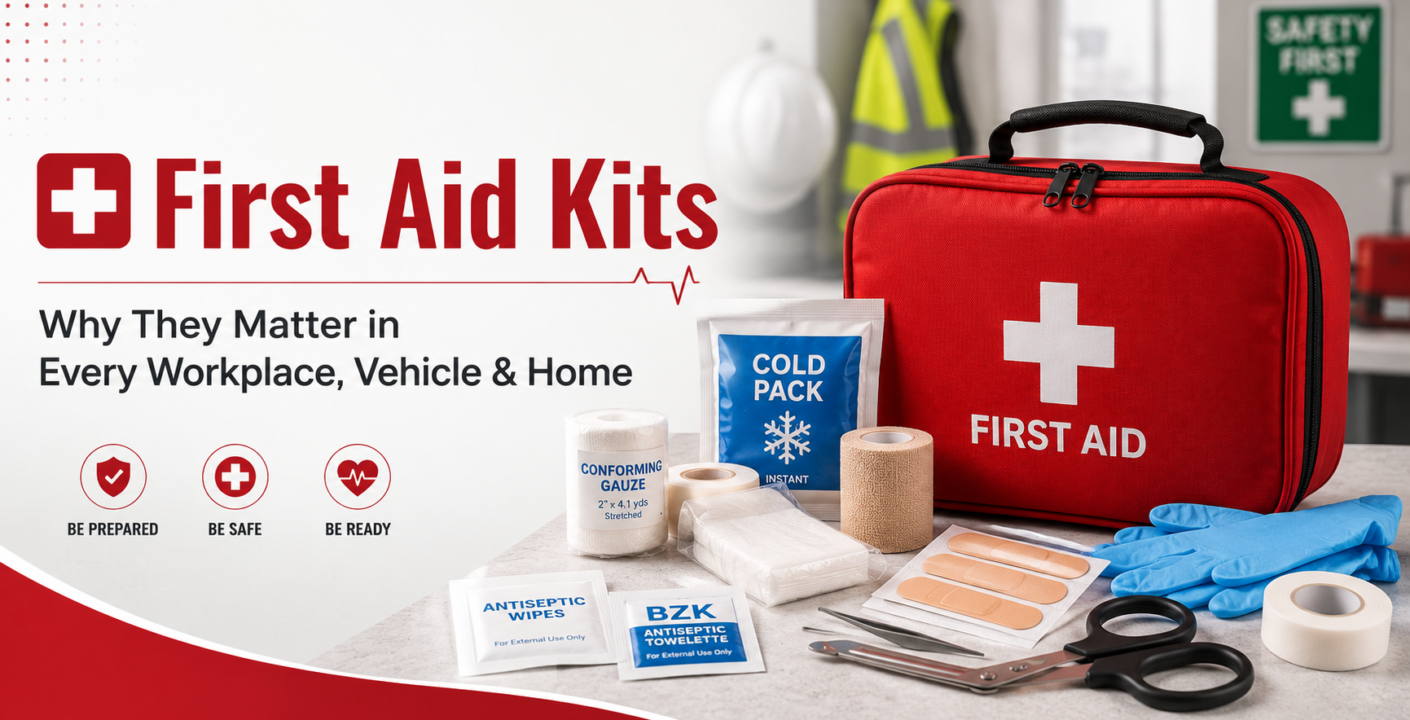
A general-purpose first aid kit commonly contains items such as:
- Adhesive bandages in different sizes
- Sterile gauze pads
- Absorbent wound dressings
- Roller or conforming bandages
- Adhesive medical tape
- Antiseptic wipes
- Disposable medical gloves
- Burn dressings or appropriate burn-care products
- Triangular bandages
- Instant cold packs
- Scissors
- Safety pins
- Eye pads where appropriate
- CPR barrier device where appropriate
- First aid instructions or guide
The contents of the kit should always be adapted to the risks of the location where it will be used.
Different Workplaces Need Different First Aid Kits
First Aid Kits for Construction Sites
Construction workers may be exposed to a wide variety of risks, including:
- Cuts and punctures
- Falling materials
- Hand injuries
- Abrasions
- Burns
- Eye injuries
- Sprains and strains
Construction sites may therefore require larger and more comprehensive first aid kits positioned in easily accessible locations.
First Aid Kits for Factories and Industrial Facilities
Industrial workplaces can contain machinery, sharp objects, chemicals, hot surfaces, and other hazards.
First aid planning should therefore reflect the specific risks present at the facility.
Where workers may be exposed to harmful corrosive substances, additional emergency equipment such as eyewash stations or emergency flushing equipment may also be required.
First Aid Kits for Offices
Offices are generally lower-risk environments compared with construction sites or factories, but injuries can still occur.
Common office incidents may include:
- Small cuts
- Slips and falls
- Minor burns
- Sprains
- Sudden medical emergencies
A compact or medium first aid box can therefore be an important part of office safety equipment.
First Aid Kits for Restaurants and Kitchens
Commercial kitchens introduce additional risks from knives, hot equipment, boiling liquids, cooking oil, and slippery floors.
First aid preparation should therefore include appropriate supplies for cuts and minor burns in addition to standard first aid materials.
First Aid Kits for Vehicles
Companies operating delivery vans, trucks, construction vehicles, or sales fleets should also consider keeping a vehicle first aid kit available.
Road incidents may occur far away from the company’s warehouse or office, making portable emergency supplies especially useful.
First Aid Kits for Schools and Public Facilities
Schools, sports facilities, municipalities, shopping centers, and other public environments can have large numbers of people passing through them every day.
Strategically positioned first aid boxes can help ensure that basic emergency supplies are quickly available when an incident occurs.
Where Should a First Aid Kit Be Located?
Having a first aid kit is useful only if people can reach it quickly.
First aid kits should generally be:
- Visible: Employees should know exactly where first aid equipment is located.
- Accessible: Kits should not be locked in areas employees cannot access during an emergency.
- Clearly marked: Appropriate first aid signage should identify their location.
- Close to risk areas: Large workplaces may require several first aid stations rather than one central box.
- Protected: Kits should be stored away from conditions that could damage or contaminate their contents.
For example, placing only one first aid kit inside an administrative office may not be sufficient for workers spread throughout a large warehouse or industrial facility.
Don’t Forget to Inspect Your First Aid Kit
One of the most common mistakes companies make is purchasing a first aid kit, mounting it on the wall, and forgetting about it.
First aid supplies are consumable. Employees may use bandages, gauze, gloves, antiseptic wipes, and other items without the kit being immediately restocked.
Some first aid products also have expiry dates.
Companies should therefore implement a regular first aid kit inspection routine.
During an inspection, check that:
- The kit is in its designated location
- The container is clean and undamaged
- Used items have been replaced
- Required quantities remain available
- Sterile packages remain sealed
- Expired products have been replaced
- Employees can easily locate the kit
For larger organizations, assigning responsibility for first aid kit inspections to a specific employee, first aider, or safety officer can help ensure that supplies remain available when needed.
A First Aid Kit Is Only One Part of Emergency Preparedness
Purchasing a first aid kit is important, but it should form part of a larger workplace safety strategy.
Businesses should also consider:
- Employee first aid training
- Emergency contact procedures
- Fire extinguishers
- Emergency eyewash equipment where necessary
- Personal Protective Equipment (PPE)
- Workplace hazard assessments
- Emergency evacuation plans
- Safety signs
- Accident reporting procedures
A first aid kit is most effective when employees know where it is located and understand how to respond appropriately during an emergency.
Serious injuries and medical emergencies should always receive appropriate professional medical attention.
How to Choose the Right First Aid Kit
When selecting a first aid kit for your company, avoid choosing solely based on the size of the box.
Consider the Number of People
A kit intended for a small office may not contain enough supplies for a large construction project, warehouse, or industrial facility.
Consider the Workplace Risk Level
Higher-risk workplaces generally require more comprehensive first aid preparation.
Consider the Types of Injuries That May Occur
A workshop, restaurant, construction site, warehouse, and office face very different hazards. Your first aid equipment should reflect those risks.
Consider Portability
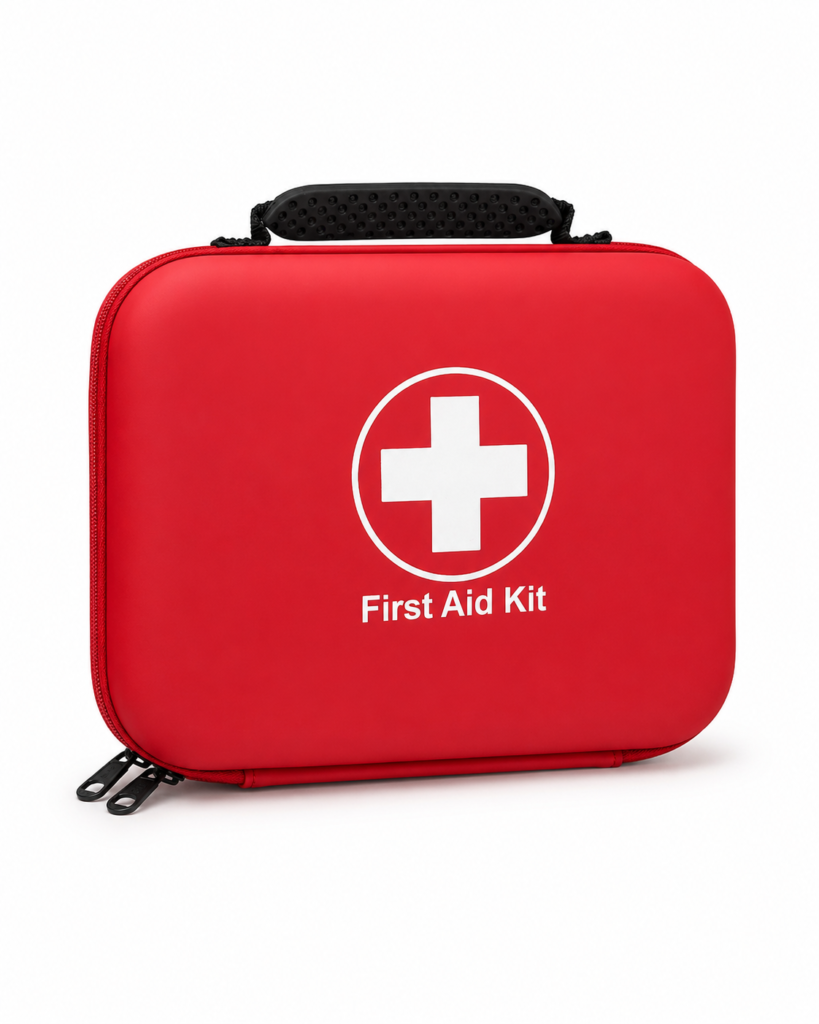
Portable first aid kits are especially useful for vehicles, construction teams, maintenance crews, technicians, and employees working in different locations.
Consider Organization
A well-organized first aid box allows users to quickly identify the required item instead of searching through loose supplies during an emergency.
First Aid Kits for Businesses in Lebanon
Whether you operate a construction company, industrial facility, warehouse, factory, restaurant, school, municipality, office, retail business, or vehicle fleet in Lebanon, first aid preparation should be considered an essential part of workplace safety.
At SUM SARL, we supply first aid kits and a wide range of professional safety equipment for businesses and organizations across Lebanon.
Our safety product range includes:
- First aid kits and first aid boxes
- Personal Protective Equipment (PPE)
- Safety shoes and safety boots
- Safety helmets
- Protective gloves
- Respiratory protection
- Road safety equipment
- Safety signs
- High-visibility clothing
- Industrial and workplace safety products
First aid kits can be selected according to the workplace size, application, number of employees, and safety requirements.
Safety Begins Before the Accident — Preparation Matters After It
A strong workplace safety program focuses first on preventing accidents. However, even the safest workplaces must remain prepared for the unexpected.
With approximately 395 million non-fatal occupational injuries occurring worldwide every year, according to the International Labour Organization, having accessible first aid supplies is a simple but important component of workplace emergency preparedness.
Don’t wait for an accident to discover that your first aid kit is missing, empty, or incomplete.
Make first aid preparation part of your company’s regular safety routine.
For professional first aid kits in Lebanon and a complete range of workplace safety equipment, contact SUM SARL for product information and quotations.
Sources & References
-
International Labour Organization (ILO) – Occupational Safety and Health:
ILO Safety and Health at Work
-
ILOSTAT – Global Occupational Safety Statistics:
ILOSTAT Occupational Safety Data
-
World Health Organization (WHO) – Injuries and Violence:
WHO Injuries and Violence Fact Sheet
-
Occupational Safety and Health Administration (OSHA) – Medical Services and First Aid:
OSHA First Aid Requirements
-
American Red Cross – Anatomy of a First Aid Kit:
Red Cross First Aid Kit Guide