

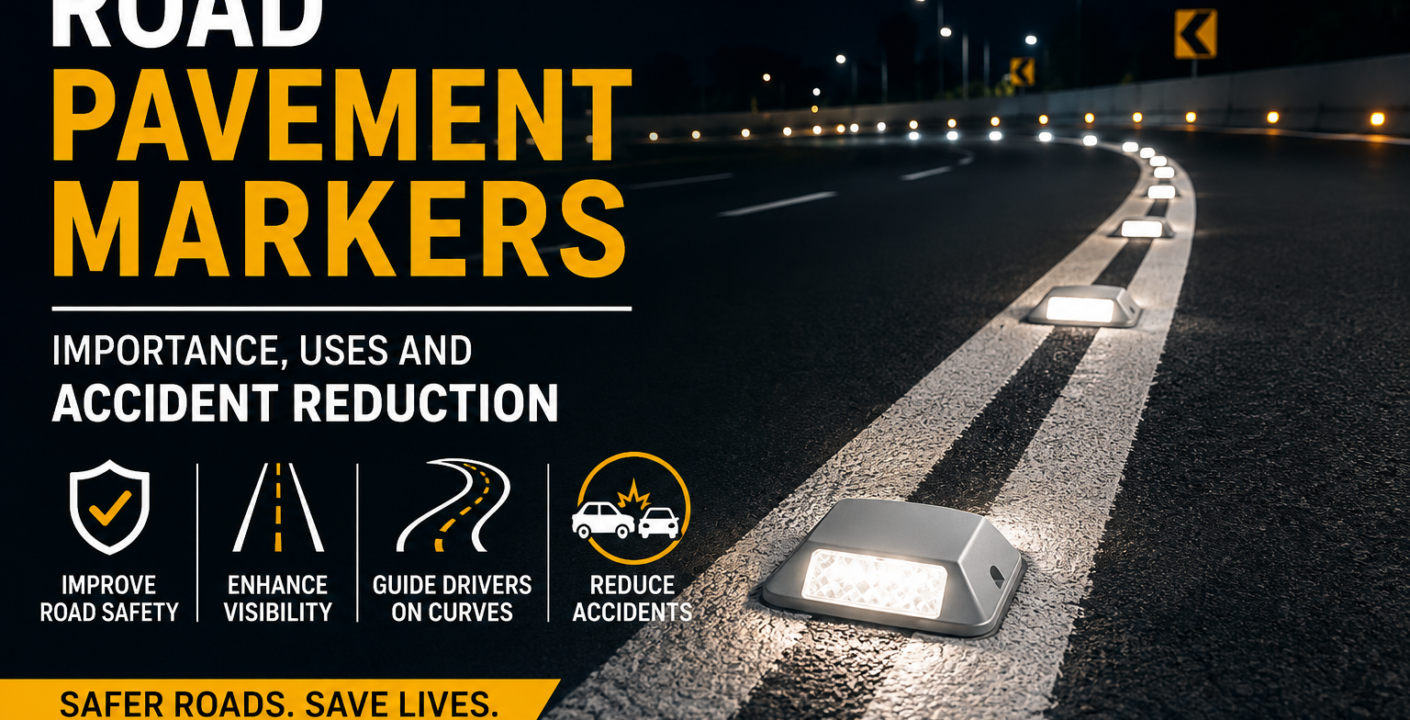
Road pavement markers, commonly known as road studs or raised pavement markers, are small devices installed directly on the road surface to improve lane visibility and guide drivers. They are particularly valuable at night, during rain, in fog and in locations where painted road markings may be difficult to see.
This article refers specifically to road studs and raised pavement markers, not traditional cat-eye reflectors.
Although road studs are relatively small, they play an important role in modern road-safety systems. They help drivers identify lanes, road edges, curves, intersections, traffic islands and other potentially dangerous areas before reaching them.
Why Road Visibility Is Important
Road traffic accidents remain a major global safety problem. According to the World Health Organization, approximately 1.16 million people die every year as a result of road traffic crashes. An additional 20 to 50 million people suffer non-fatal injuries, with many experiencing long-term disabilities.
Road traffic injuries are also the leading cause of death among children and young adults between the ages of 5 and 29.
Source: World Health Organization – Road Traffic Injuries.
Poor visibility increases the difficulty of identifying:
- Lane boundaries
- Road edges
- Sharp curves and bends
- Traffic islands and medians
- Intersections and roundabouts
- Pedestrian crossings
- Changes in road direction
- Fixed obstacles near the roadway
Road studs create clear and visible reference points, helping drivers understand the road layout and maintain a safer position within their lane.
How Do Reflective Road Studs Work?
Reflective road studs contain retroreflective materials that receive light from vehicle headlights and reflect it back toward the driver. This makes the road studs highly visible without requiring an external electrical supply.
Solar road studs contain integrated LED lights powered by solar energy. These markers provide active illumination and are commonly used in particularly dangerous or poorly lit locations.
Depending on the model and road conditions, road studs may be fixed to the pavement using a strong road-grade adhesive, mechanical anchors or a combination of both methods.
Main Uses of Road Pavement Markers
1. Separating Traffic Lanes
Road studs make lane divisions easier to identify, especially on highways, wide roads and multi-lane routes. Clear lane separation helps drivers remain correctly positioned and reduces accidental lane drifting.
2. Marking the Center of the Road
On two-way roads, road studs can highlight the centerline separating vehicles travelling in opposite directions. This is particularly important on dark rural roads and roads with faded painted markings.
3. Defining Road Edges
Road studs installed along the edge of a road help drivers identify the usable width of the roadway. This application is particularly useful on mountain roads, coastal roads and rural roads without adequate street lighting.
4. Guiding Drivers Through Curves
Sharp and unexpected curves can be difficult to judge at night. A properly installed sequence of reflective road studs creates a visible path through the curve, helping drivers understand its direction before entering it.
5. Organizing Intersections and Roundabouts
Road studs can be used to identify entry lanes, exits, turning paths and restricted areas at intersections and roundabouts. This reduces confusion and supports more organized traffic movement.
6. Highlighting Pedestrian Crossings
Reflective or illuminated road studs can improve the visibility of pedestrian crossings, especially near schools, hospitals, public buildings and busy commercial areas.
7. Marking Traffic Islands and Obstacles
Road studs can highlight traffic islands, medians, bridge structures, lane separators and other fixed objects that may present a risk to drivers.
8. Improving Temporary Traffic Routes
Temporary road studs may be used in construction zones, road diversions and newly established traffic lanes. They help drivers follow temporary routes when the original road layout has changed.
9. Supporting Tunnels and Parking Facilities
Road studs are also suitable for tunnels, ramps, airports, underground parking facilities, industrial sites, warehouses and private roads where clear vehicle guidance is required.
Road Stud Colors and Their Uses
The color and positioning of road studs must follow the applicable traffic regulations and engineering standards of the country where they are installed.
Common applications may include:
- White road studs: Commonly used to separate lanes carrying traffic in the same direction.
- Yellow road studs: Commonly used to separate opposing traffic directions or identify specific road boundaries.
- Red road studs: May warn drivers that they are travelling in the wrong direction or approaching a prohibited area.
- Blue road studs: May be reserved for special applications, depending on local road regulations.
Color meanings are not identical in every country. Municipalities and contractors should therefore follow approved local road-marking standards and traffic-engineering plans.
How Road Studs Help Reduce Accidents
Road studs cannot prevent every accident and should not replace safe driving, proper signs or adequate road lighting. However, they can help reduce accident risk by providing drivers with clearer and earlier visual guidance.
Improved Lane Discipline
Visible lane boundaries make it easier for motorists to maintain the correct road position. This can reduce accidental lane departures and movement into opposing traffic lanes.
Earlier Recognition of Curves
A sequence of reflective markers allows drivers to recognize the shape and direction of a curve earlier. This provides additional time to reduce speed and adjust steering.
Better Guidance in Rain and Poor Weather
Painted road markings can become harder to distinguish when the road surface is wet. Raised reflective road studs provide additional visual reference points during rain and wet nighttime conditions.
Reduced Driver Confusion
Road studs can clearly define lane paths at complicated intersections, roundabouts, highway exits, construction zones and areas where traffic lanes shift direction.
Wrong-Way Driving Warnings
Markers with red reflectors facing the incorrect direction can provide an immediate visual warning to drivers entering a road or ramp against the permitted traffic flow.
Greater Awareness of Dangerous Areas
Road studs can draw attention to sharp curves, pedestrian crossings, narrow roads, traffic islands and other locations where drivers must take additional care.
Road Stud Accident-Reduction Statistics
The effectiveness of road studs varies depending on the road design, traffic volume, marker type, weather conditions, installation quality and the types of accidents being studied.
One study listed by the U.S. Federal Highway Administration’s Crash Modification Factors Clearinghouse estimated a 33% reduction in nighttime crashes following the installation of permanent raised pavement markers.
However, this result applied to specific conditions: rural four-lane principal arterial freeways and expressways with high traffic volumes. It should not be interpreted as a guaranteed 33% accident reduction on every road.
Source: FHWA Crash Modification Factors Clearinghouse.
A broader FHWA review found that the results of raised pavement marker installations can be mixed. Some road types showed limited overall changes, while reductions were recorded in certain wet-weather and high-volume nighttime conditions.
Source: Federal Highway Administration – Combined Impacts of Markers.
These findings show why road studs should be selected according to the individual road location rather than installed using one general approach. When applied at suitable locations, they can form an effective part of a complete accident-reduction strategy.
Where Should Road Studs Be Installed?
Road studs are particularly useful in the following locations:
- Dark roads without sufficient street lighting
- Sharp curves and dangerous bends
- Highways and expressways
- Mountain and rural roads
- Roundabouts and intersections
- Pedestrian crossings
- School and hospital zones
- Bridges and tunnels
- Road construction and diversion areas
- Industrial and warehouse facilities
- Airport and port roads
- Underground and outdoor parking facilities
The Importance of Correct Installation
The effectiveness and durability of road studs depend heavily on correct installation. Municipalities and contractors should consider:
- The direction and flow of traffic
- Road speed and traffic volume
- Required visibility distance
- Correct spacing between markers
- Marker color and reflector direction
- Condition of the road surface
- Type of adhesive or anchoring system
- Resistance to water, impact and temperature changes
- Safety considerations for motorcycles and bicycles
Incorrectly positioned, damaged or improperly colored road studs may confuse drivers. Installation should therefore be completed according to an approved engineering plan and relevant road-safety standards.
Road Stud Maintenance
Road studs should be inspected regularly to ensure that they remain visible and securely attached to the pavement.
Maintenance inspections should check whether the markers are:
- Correctly positioned and aligned
- Firmly attached to the road
- Clearly visible at night
- Free from dirt, oil and debris
- Undamaged by traffic or weather
- Consistent with the surrounding road markings
Damaged or missing markers should be replaced promptly, particularly on high-speed roads, sharp curves and dangerous intersections.
Road Studs as Part of a Complete Road-Safety System
Road studs should not be considered a replacement for painted road markings, road signs, barriers, speed-control products or street lighting. Their greatest safety benefit is achieved when they are combined with other road-safety solutions.
A complete road-safety system may include:
- Reflective and solar road studs
- Clear pavement markings
- Traffic signs
- Road delineators
- Speed bumps
- Traffic cones
- Road barriers
- Pedestrian-crossing equipment
- Warning lights
- Adequate street lighting
Conclusion
Road pavement markers are a practical and cost-effective method of improving road visibility and vehicle guidance. They help motorists recognize lanes, road edges, curves, intersections and hazardous locations more quickly.
With approximately 1.16 million people dying in road traffic crashes every year, improvements in road infrastructure remain essential. High-quality road studs, when properly selected, installed and maintained, can help improve lane discipline, reduce driver confusion and lower the risk of certain nighttime and wet-weather accidents.
Road studs are most effective when they are installed as part of a professionally planned road-safety system that also includes visible markings, warning signs, lighting and appropriate speed-management measures.
Professional Road Studs and Road-Safety Equipment in Lebanon
SUM SARL supplies durable road studs and professional road-safety equipment for municipalities, contractors, industrial facilities, parking areas and private road projects throughout Lebanon.
Our road-safety collection includes road studs, speed bumps, traffic cones, delineators, barriers, warning lights and other solutions designed to improve visibility and traffic organization.
Contact SUM SARL for road studs and professional road-safety solutions in Lebanon.